
Waynesboro City Directory Collections
Waynesboro's historical directory shelf has a few firm anchors and several honest gaps. The Downtown Waynesboro Historic District nomination verifies a 1950-51 title published by Directory Publishers, Inc. It does not establish a continuous run before or after that edition. The Waynesboro Public Library Local History & Genealogy Room reports city directories among its books and archival research material, but its online list does not itemize each title, publisher, or reverse-directory volume. Call ahead when a particular year matters.
| Directory or companion | Verified period | Holding or citation | Practical access |
|---|---|---|---|
| Waynesboro (Augusta County, Va.) City Directory | 1950-51 | NPS nomination bibliography | Online citation; confirm the physical volume with a local archivist |
| Chataigne's Augusta County Gazetteer and Classified Business Directory | 1888-89 | DHR/NPS historic material | Historical business and household context, not a complete resident roll |
| Waynesboro library directory and microfilm holdings | Years not itemized online | Local History & Genealogy Room | In person, with archivist availability for some material |
| Sanborn map sequence | 1886-1948, selected editions | Downtown nomination documentation | Use with a directory to test building and address context, not household identity |
That distinction matters. A city directory is a dated publication, while a map shows a building or land-use setting. Neither substitutes for a current deed record. Local shelf inspection is the right next step for a year-by-year inventory, a direct entry image, or a confirmed criss-cross section.
Waynesboro's 1950-51 City Directory
The 1950-51 citation is the most specific verified Waynesboro directory lead in the research. The nomination bibliography names it as Waynesboro (Augusta County, Va.) City Directory, 1950-51, published at Ellerson, Virginia, by Directory Publishers, Inc. in 1951. Record the title exactly when asking a librarian or archive for it. That approach avoids turning one documented edition into an unsupported claim about a full series.
The Library of Congress guide to city directories describes the usual historical pattern: names are often arranged alphabetically and may carry an address, telephone, spouse, occupation, or listed organization. Those are structural possibilities, not a substitute for an inspected Waynesboro line. The locally verified volume should be photographed or transcribed with its page number, year, and abbreviation key before it is compared with a census, obituary book, or parcel record.
Note: A directory year marks publication, so it may reflect information gathered before the year printed on its cover.
Waynesboro's Library Directory Shelf
The library is the strongest local starting point for historical names and addresses. Its Local History & Genealogy Room holds city directories alongside obituary books, county records, school yearbooks, military resources, cemetery and family files, local-business histories, and census, county-record, and newspaper microfilm. Ancestry Library Edition is available on library computers or Wi-Fi, and FamilySearch support is available with a free account. Those companion sources can test whether a directory name and an address belong to the same household at a particular point in time.
The library's genealogy page identifies the room as open Monday through Friday from 9 a.m. to 5 p.m., with other times by appointment. Some material requires an archivist on duty. The main library may be open when a special item cannot be pulled, so a surname, approximate year, and collection request are worth providing before a visit.
The Local History & Genealogy Room listing shows the research setting used for the city-directory shelf.
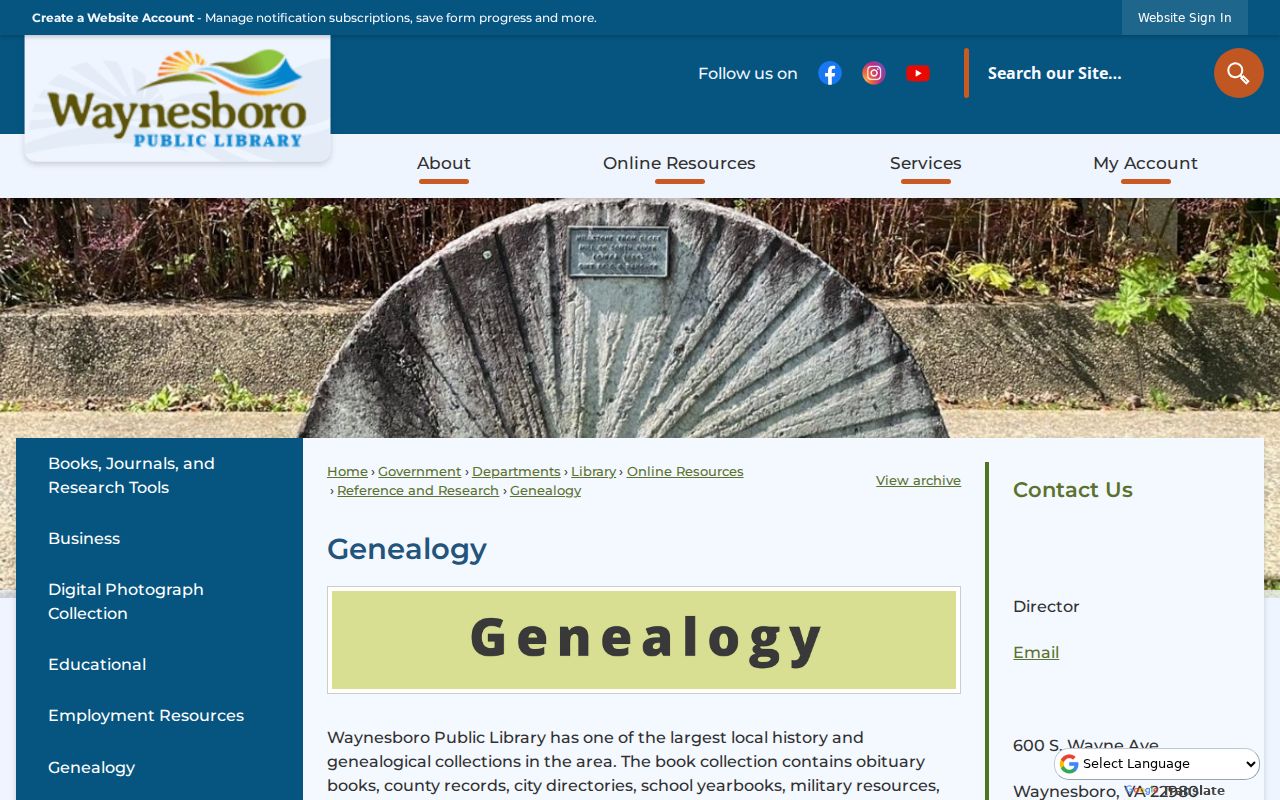
The room brings directories, microfilm, obituary books, and family files into one local access point, which is useful when a name does not appear in a digitized search.
Reading a Waynesboro City Directory
No directly viewable Waynesboro entry was captured during the research, so the safe method is to inventory the volume in hand rather than presume its marks. Start with the title page, publication year, and front-matter key. Then record the exact spelling, initials, street number, and any printed notation. The Library of Congress notes that historical directories can include name, address, telephone, spouse, and occupation information, but the local edition controls what a given line actually says.
| Field to inspect | Why it matters locally |
|---|---|
| Name and initials | Preserve spelling and initials before matching a similar name in another record. |
| Street address | Compare it with the year's map, newspaper, census, or later deed trail. |
| Telephone, spouse, or occupation | These may appear in historical directories, but must be transcribed from the actual local line. |
| Owner or renter mark | No Waynesboro sample was inspected, so do not assume a local symbol or its meaning. |
- Criss-cross directory
- An address-ordered index that can place listed entries along a street. Waynesboro holdings and years need confirmation from the library.
- Householder index
- An index arranged around a household head or address rather than simply every surname in alphabetical order.
- Abbreviation key
- The printed explanation for shortened words and symbols. Read it before assigning meaning to an entry.
Waynesboro Directories Before 1923
Historical labels shape a successful Waynesboro directory search. The city formed in 1801, incorporated as a town in 1834, and became a city in 1948. Basic City consolidated with Waynesboro in 1923. A person or address from the 1910s may therefore appear under Basic City or Augusta County rather than under a modern Waynesboro heading. The Library of Virginia newspaper directory is useful for testing those place-name variants against newspaper holdings.
| 1801 | Waynesboro formation recorded by the Library of Virginia locality record. |
|---|---|
| 1834 | Town incorporation, an early jurisdictional label for local material. |
| 1923 | Basic City consolidated with Waynesboro, changing likely directory and newspaper headings. |
| 1948 | Waynesboro became a city, the modern municipal context for later records. |
| 1950-51 | Verified city-directory citation in the Downtown nomination bibliography. |
This is a records-geography issue, not proof that a household moved. Search all three labels before treating an absent city-directory result as a dead end.
Waynesboro Directory Companions
Directories work best beside material that has a different purpose. The library reported 34 digitized volumes of the Waynesboro High School yearbook The Skyline in its FY2018 annual report. Yearbooks can add a class, activity, photograph, or surname lead that needs later confirmation in a dated directory or archival record. Exact Internet Archive item links were not confirmed in the research, so begin through the library rather than assuming a particular volume is online. An older library archive description reports more than 7,000 Genealogy Room items, including books, photographs, maps, newspapers, and personal or family records.
Obituary books, local newspaper microfilm, and cemetery or family files can narrow a date range after a directory disappearance. The library's online page does not identify a separately searchable obituary index or its coverage years. Ask staff for a surname-and-date lookup route. A newspaper announcement can be a strong lead, but it is not a replacement for a vital certificate or a court record.
The Waynesboro Historical Society collection description identifies its Gembe Genealogy Room, family binders, cemetery lists, undertaker records, and manuscript holdings.
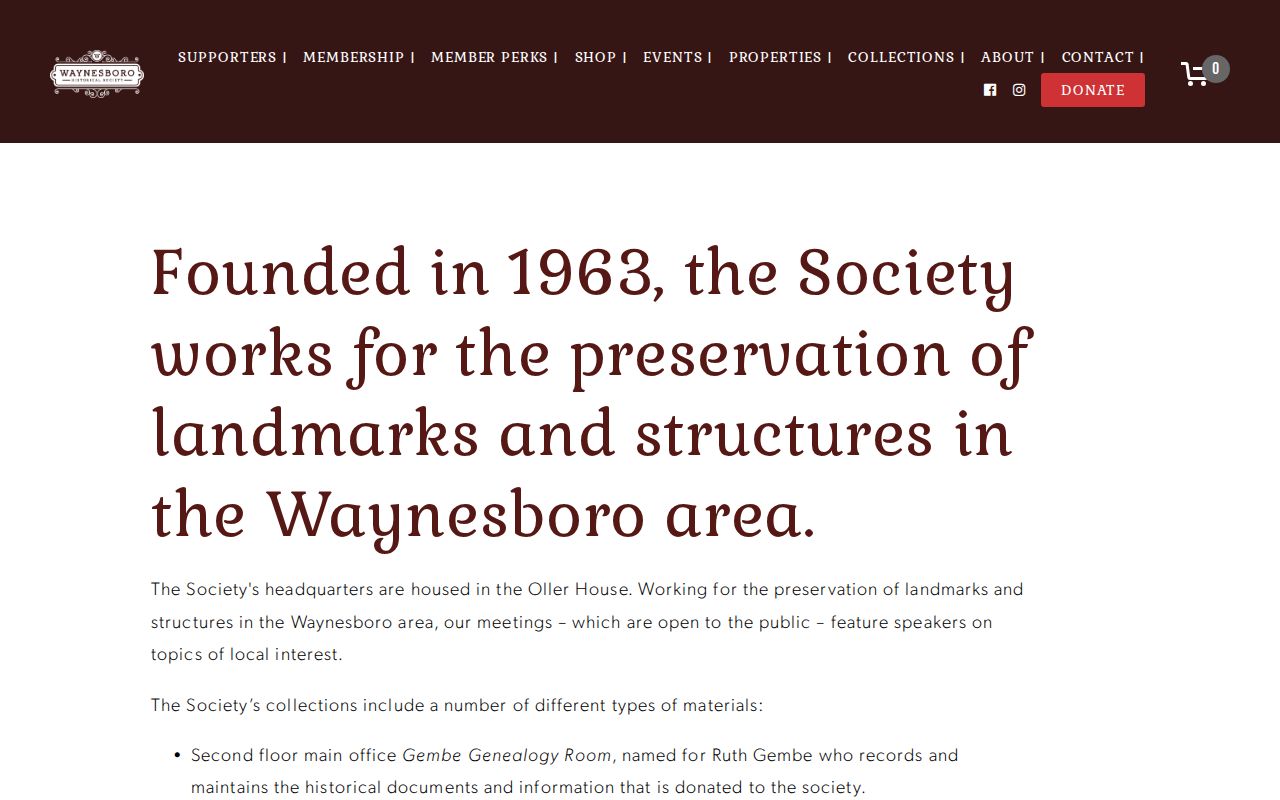
Those collections can bridge a directory name to burial, family, manuscript, and address history when a government index does not show a household-level result.
Waynesboro Historical Directory Files
The Waynesboro Historical Society, founded in 1963, maintains the Gembe Genealogy Room and Calimer Library at Oller House. Its described holdings include family-name binders, cemetery burial lists, undertaker records, photographs, manuscripts, letters, diaries, account books, deeds, minutes, and scrapbooks. These are not a general directory, but they can connect a surname to a place or a funeral and burial trail that explains a directory gap.
The Waynesboro Heritage Foundation provides another local route for cataloged images and documents, including advertisements, brochures, tickets, and telegrams. Contact the Foundation for item-level access rather than assuming every digitized item is downloadable. For pre-city or surrounding-area context, the Augusta County Historical Society archive collection holds Waynesboro Historical Commission material, but that historical connection does not change custody of modern city records.
Keep the handoff between these collections explicit. A library volume documents a printed listing, a society binder may preserve a family or cemetery lead, and a deed or vital record belongs with its government custodian. That division is useful when a name appears in only one source. Ask staff which collection supplied the lead, whether an item is original or a later copy, and how its date was established before treating it as a firm household connection.
Tracing Waynesboro City Directories
Follow one household in a dated sequence and keep each source separate. Begin with the earliest confirmed directory mention, then work forward only through volumes that staff can identify. When an address changes, test the new number against the appropriate map edition and a newspaper or census lead. A directory name means the publisher listed that person at that time. It does not establish current residence, ownership, or a complete household.
- Ask the library or historical society for the earliest available volume matching the surname, with Basic City and Augusta County variants included when the period calls for them.
- Transcribe the entry exactly, including its year, page, spelling, initials, address, and every abbreviation explained in the book.
- Check the next confirmed directory year for the same name, a spouse or initial variant, and an address change rather than assuming an exact spelling will persist.
- Pair the address with the closest documented Sanborn edition or census and note whether the evidence concerns a building, a household, or a published listing.
- Use obituary books, cemetery files, newspaper microfilm, or a deed trail to test a move, death, or family connection before closing the search.
For modern parcel or street research, use the Waynesboro Streets page rather than forcing an old directory to answer a current-address question. The historical shelf is strongest when it preserves a dated household clue and shows where another custodian should be consulted.
Note: Keep the volume title and page with every transcription, because later researchers need to distinguish a printed entry from a later interpretation.